The Slow Damage Problem: How Everyday Storage Mistakes Are Quietly Wrecking Your Frames
Most people assume their glasses got damaged in a single dramatic moment. A drop. A scratch from keys in a bag. An accidental sit-down. And yes, those things happen. But the more common — and more expensive — story is a slower one. It's the cumulative effect of dozens of small, unremarkable storage and care habits that gradually degrade your frames until one day you're at the optometrist wondering why you need to replace a pair that "should still be fine."
Understanding this process isn't about being precious with your glasses. It's about protecting a real investment. A mid-range pair of prescription frames in the US typically runs $200 to $500 once you factor in lenses. Premium frames with specialty coatings can push well past $700. That's not a small number to replace prematurely because of avoidable wear.
What's Actually Happening to Your Lenses Right Now
Lens coatings are the first thing to go, and they're the most expensive thing to lose. Modern prescription lenses rarely come without at least one coating — anti-reflective (AR), scratch-resistant, UV, blue light filtering, or some combination of all four. These coatings are extraordinarily thin, measured in microns, and they're bonded to the lens surface through a process that's durable under normal conditions but surprisingly vulnerable to a few specific enemies.
Heat is the big one. Leaving glasses in a hot car — even for a relatively short period — can cause lens coatings to expand and contract at a different rate than the lens itself, creating the crazing effect you may have seen: a web of tiny cracks across the surface that can't be buffed out or repaired. In many parts of the US, a car interior can reach 130–150°F on a summer afternoon. That's well above the threshold where most AR coatings begin to degrade. Once crazed, the lens is functionally ruined and needs to be replaced — which typically costs $100–$300 per pair depending on prescription complexity and coating type.
Humidity swings are underrated damage agents. Storing glasses in a bathroom — which most people do at some point — exposes them to repeated cycles of high humidity followed by dry air. Over time, this can cause the coating adhesion to weaken, leading to peeling or clouding around the edges of the lens. It also accelerates corrosion on metal frames and hinges, particularly on lower-cost alloys.
Dust accumulation is more destructive than it sounds. Dry-wiping dusty lenses — which feels harmless and is almost universal — is one of the leading causes of fine scratching. Dust particles, especially silica-based grit, are harder than most lens materials. Dragging them across a lens surface with a soft cloth creates micro-abrasions that progressively degrade optical clarity. You won't notice it on day one, but after six months of daily dry-wipes, the difference is measurable.
Frame Materials and Their Specific Vulnerabilities
Not all frames age the same way. Knowing what yours are made of helps you store and maintain them correctly.
Acetate frames — the thick, colorful plastic frames that have dominated fashion eyewear for the past decade — are actually cellulose-based and can warp when exposed to prolonged heat or direct sunlight. The color can fade or yellow with UV exposure over time. They're also vulnerable to certain chemical exposures: hairspray, sunscreen, and some cleaning products can cloud or pit the surface.
Metal frames (titanium, stainless steel, monel alloys) are generally more durable but have their own issues. Hinges and screws are the weak points — small screws loosen with daily use and can fall out entirely if not periodically tightened. Sweat and salt air accelerate corrosion on lower-grade alloys. Nose pads on metal frames are typically replaceable but are often overlooked until they've discolored or deteriorated to the point of causing skin irritation.
TR-90 and other nylon-based frames are lightweight and flexible but can become brittle with age, particularly if stored in environments with very low humidity or extreme temperature swings.
The Cost Comparison That Makes the Case
Here's a simple way to think about it. A basic AR coating replacement runs roughly $100–$150 per lens at most US optical retailers. A full lens replacement on a premium progressive prescription can run $400–$600 for the pair. A new frame-and-lens package at a mid-range optometrist: $350–$700 out of pocket after insurance.
Contrast that with the cost of prevention:
- A quality hard-shell case: $10–$30
- A microfiber storage pouch: $5–$15
- A lens cleaning solution and proper cloths: $10–$20 per year
- A countertop or drawer organizer that keeps frames upright and separated: $20–$60
The math isn't subtle. A $30 case and a $15 cleaning kit, used consistently, can extend the functional life of a $500 pair of frames by years. That's not a minor return.
Preventative Storage: The Practical Fixes
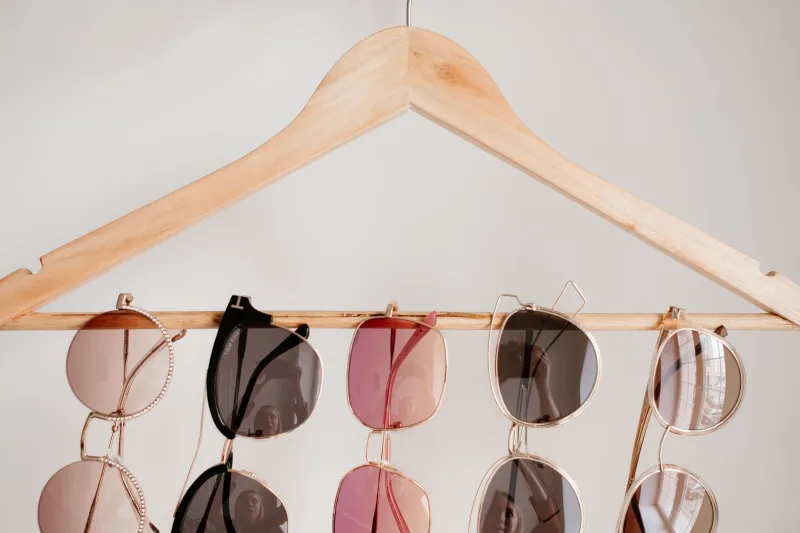
Keep frames in a case when not in use. This sounds obvious but is widely ignored. A hard-shell case protects against compression, impact, and dust. If you have multiple pairs, a dedicated organizer that holds them upright — lenses forward, not face-down — prevents lens-to-surface contact.
Never leave glasses in a car. In the summer especially, this is one of the fastest ways to destroy a lens coating. If you need glasses in the car, keep them in an insulated pouch or a case designed for temperature fluctuation.
Store away from the bathroom. A bedroom dresser, nightstand, or dedicated eyewear display in a climate-stable area of your home is significantly better than a medicine cabinet above a steamy sink.
Rinse before wiping. Running lenses under lukewarm water before cleaning removes grit and dust that would otherwise scratch under cloth pressure. Follow with a drop of dish soap or dedicated lens cleaner, a gentle wipe with a clean microfiber cloth, and air dry or pat dry. This one change alone dramatically extends lens clarity.
Check screws every few months. A small eyeglass repair kit (available at most pharmacies for under $5) includes the tiny screwdrivers needed to tighten hinge screws. Doing this twice a year takes about two minutes and prevents the hinge failure that often makes otherwise-salvageable frames unwearable.
The Real Cost of Neglect
The frames you own right now represent real money. More than that, they represent a prescription that was calibrated to your vision, a fit that was adjusted to your face, and probably some degree of personal style investment. Replacing them early — not because your prescription changed, not because your tastes evolved, but because of preventable wear — is genuinely unnecessary.
Good storage habits and basic maintenance aren't about being fussy. They're about getting the full value out of what you already own. And in a world where eyewear costs keep climbing, that's a practical choice, not a precious one.