Does That $400 Frame Actually Make Sense? A Real-World Cost-Per-Wear Breakdown

We've all been there. You're standing in an optician's showroom, holding a pair of frames that feel like they were designed specifically for your face. Then the sales associate mentions the price, and suddenly you're doing some very uncomfortable mental math.
Is $400 a lot for glasses? What about $600? Or, on the flip side, is that $89 online pair actually the steal it seems like? The honest answer is: it depends — and there's a practical framework that can help you figure it out before you commit.
This isn't about telling you to spend more or spend less. It's about spending smarter, with a clear head and a method that actually maps to your real life.
What Cost-Per-Wear Actually Means (and Why It Matters for Eyewear)
Cost-per-wear is a concept that's been floating around fashion circles for years, usually applied to clothing. The idea is simple: divide the total price of an item by the number of times you'll realistically use it. A $300 blazer you wear twice a week for three years ends up costing you about $1 per wear. A $50 trendy top you reach for four times before it falls apart? That's $12.50 per wear.
Apply that same logic to eyewear, and things get interesting fast.
Glasses are arguably better candidates for this kind of analysis than almost anything else in your wardrobe. You wear them every single day — sometimes all day — which means a quality pair has enormous potential to deliver real value over time. But only if you're actually wearing them, caring for them properly, and storing them in a way that extends their lifespan.
Running the Numbers: A Simple Formula
Here's the basic math:
Cost-Per-Wear = Total Price ÷ Number of Wears
For eyeglasses, "number of wears" translates to days worn. To estimate that, think about:
- How often will you actually reach for this pair? A prescription pair you need daily is going to rack up wears fast. A bold statement frame you pull out for special occasions? Much slower burn.
- How long do you realistically expect them to last? A well-made metal or acetate frame stored correctly can last three to five years or longer. A flimsy pair that gets tossed in a bag without a case might not survive the year.
- Are you the type who rotates frames, or do you commit to one pair at a time? If you're a rotator with five pairs in regular circulation, each pair gets fewer wears — which changes the math considerably.
Let's run two quick examples:
Scenario A: A $450 designer frame you wear as your primary everyday pair, 300 days a year, for three years. That's 900 wears. Cost-per-wear: $0.50.
Scenario B: A $95 budget frame you buy impulsively, wear maybe 60 days before the hinges loosen and you stop reaching for them, then replace within a year. Cost-per-wear: $1.58.
Suddenly the "expensive" pair is the better deal.
The Factors That Actually Shift the Equation
Raw price is only one piece of this. A few other variables move the needle significantly:
Durability and Build Quality
Premium frames — think titanium, high-grade acetate, or well-engineered spring hinges — are built to hold up. They're less likely to warp, snap, or lose their shape after a few months of regular wear. If a frame lasts twice as long as a cheaper alternative, that automatically cuts its cost-per-wear in half, even if the sticker price is higher.
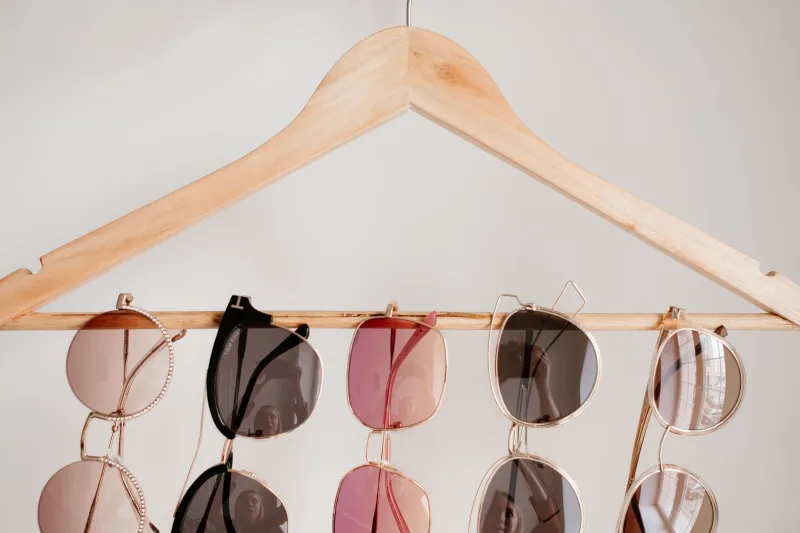
This is where proper storage plays a real role too. Frames that live in a dedicated case or organized display — rather than getting tossed on a nightstand or buried in a bag — simply last longer. The investment you make in keeping your collection organized directly protects the investment you made in the frames themselves.
Versatility Across Your Wardrobe
A frame that works with everything you own gets worn more often. Classic silhouettes in neutral or semi-neutral tones tend to accumulate wears faster than highly trend-specific shapes or colors that only work with certain outfits. When you're evaluating a pricier pair, ask yourself honestly: will I reach for these three times a week, or more like three times a month?
Prescription vs. Non-Prescription
If a frame is holding your prescription lenses, it's functional — you need it. That need drives up the wear count naturally. Fashion frames or non-prescription sunglasses require a bit more honest self-assessment because the decision to wear them is purely optional.
Lens Costs
Don't forget to factor in lenses, especially for prescription pairs. A $200 frame with a $300 lens package is a $500 total investment. That changes your cost-per-wear calculation. On the other hand, a frame that can accept future lens replacements without requiring a whole new purchase stretches your value even further.
When the Premium Price Actually Pays Off
Based on this framework, a higher-priced frame tends to justify itself when:
- It's filling a daily-use slot in your rotation
- The construction quality is genuinely superior (ask about materials, check the hinge mechanism, look for even acetate thickness)
- The style is versatile enough to work across multiple contexts — work, weekends, evenings
- You have a solid storage and care routine that will protect the frame over time
- The design is classic enough that you won't feel dated wearing it two or three years from now
When the Budget Option Wins
Not every frame slot in your collection needs to be a premium purchase. Budget-friendly options make sense when:
- You're experimenting with a bold new shape or color you're not sure about yet
- The frame will see limited use — maybe once or twice a week at most
- You're filling a very specific situational need (beach sunglasses, backup readers, etc.)
- You're between prescriptions and expect to update your lenses soon anyway
Building a Collection That Makes Financial Sense
The smartest approach for most eyewear enthusiasts isn't all-premium or all-budget — it's intentional mixing. Anchor your collection with one or two well-made, versatile everyday frames that earn their cost-per-wear through sheer volume of use. Then supplement with a handful of more affordable options for variety, experimentation, and situational needs.
When you organize your frames in a way that keeps them visible and accessible — whether that's a countertop display, a dedicated drawer organizer, or a wall-mounted rack — you naturally rotate through them more often. And more rotation means more wears, which means better value across your entire collection.
The $400 frame question doesn't have a universal answer. But with a little math and some honest self-reflection about how you actually live with your glasses, the right answer for you gets a lot clearer.