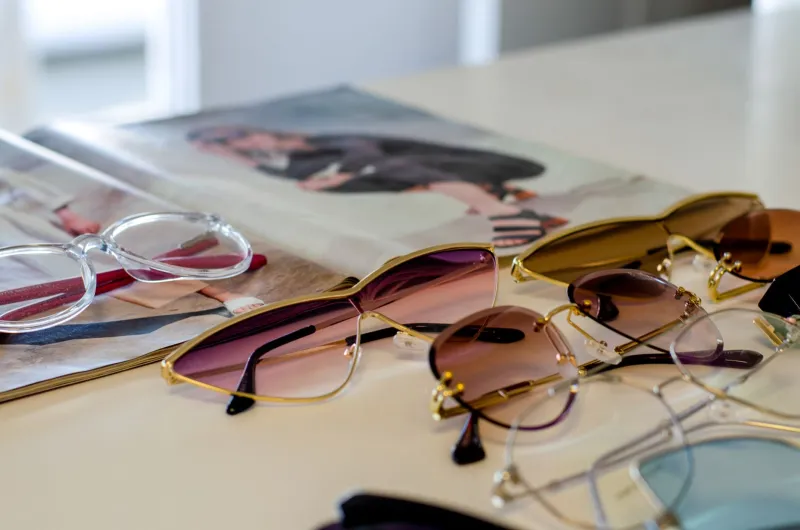
How Many Frames Is Actually Enough? Finding Your Personal Sweet Spot
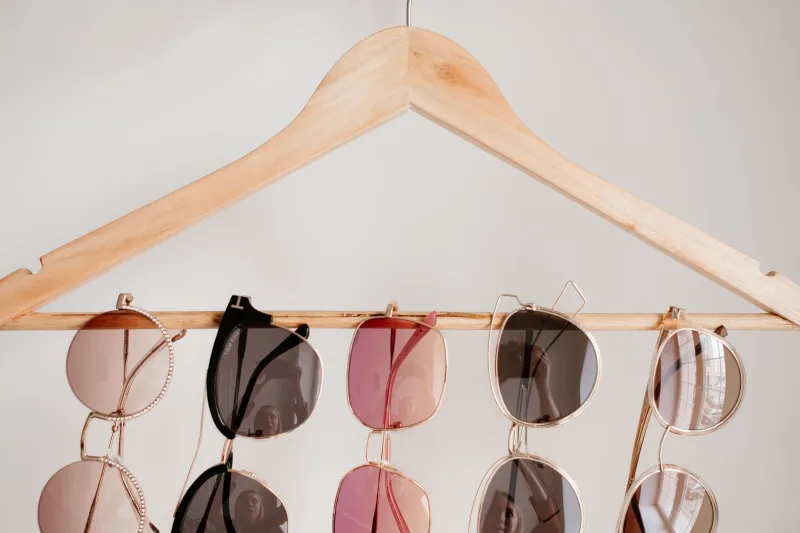
There's a particular kind of anxiety that hits when you open your eyewear organizer and feel... something. Maybe it's guilt because you have fifteen pairs and only wear three. Maybe it's that nagging sense of lack even though you've got a solid eight frames lined up. Either way, the feeling is real—even when the logic behind it is fuzzy.
Here's the thing nobody really talks about: the right number of frames has almost nothing to do with an actual number. It's about fit—how well your collection maps to your actual life, your habits, and yes, even your emotional relationship with your glasses.
So before you go on a purge or add another pair to your cart, let's slow down and figure out what your collection is actually telling you.
Why Your Gut Feeling About Your Collection Is Often Wrong
Humans are notoriously bad at assessing what they own versus what they use. Studies on closet psychology (and yes, people study this) consistently show that most of us overestimate how often we reach for things we love and underestimate how much of what we own just sits there.
Eyewear is no different. You might swear you rotate through all twelve of your frames regularly, but if you tracked it honestly for a month, you'd probably find a core group of three or four doing most of the heavy lifting. That's not a failure—it's just human nature. We attach meaning to objects, and meaning can trick us into thinking we're using something more than we are.
On the flip side, collectors who feel like they never have enough often aren't reacting to an actual gap in their wardrobe. They're reacting to a gap in variety—a specific type of frame or occasion that isn't covered. That's a very different problem, and it has a much more targeted solution.
The Three Factors That Actually Determine Your Ideal Frame Count
1. Wear Frequency — The Honest One
This is your starting point. Think about the last 30 days. How many distinct pairs did you reach for? Not which ones you could have worn—which ones you actually put on your face?
For most people, that number lands somewhere between two and five. If you've got twenty pairs and you're cycling through five, you've got a utilization rate of 25%. That's not necessarily a problem if the other fifteen bring you genuine joy or serve a backup purpose—but it's worth knowing.
A healthy collection, by most practical standards, has a utilization rate above 50%. That means if you own ten pairs, at least five should be seeing regular rotation. If you're nowhere near that, your collection isn't sized wrong—it's just not organized around your real life.
2. Lifestyle Flexibility — The Practical One
Some people live lives that genuinely require more frames. A freelance photographer who shoots outdoors needs reliable sun protection plus a sharp pair for editing. A teacher who also coaches weekend soccer has different visual needs on Tuesday afternoon than Saturday morning. A remote worker who occasionally presents on video calls has different aesthetic priorities than someone in a client-facing office role five days a week.
Your lifestyle isn't static, and your collection shouldn't be either. The question isn't "how many frames do I own?"—it's "do I have coverage for the actual scenarios my life throws at me?" If the answer is yes, you're probably in good shape. If you're constantly grabbing the same pair because nothing else quite fits the moment, that's a real gap worth filling.
Think in categories, not quantities. Prescription everyday wear, optical backup, sun protection, specialized use (blue light, sport, etc.), and occasion-specific style. You don't need five pairs in each category—you just need something in the ones that matter to your routine.
3. Emotional Attachment — The Complicated One
This one trips people up because it feels less legitimate than the practical stuff. But emotional attachment to frames is real, and it's worth accounting for.
Maybe you have a pair from a trip to New York that you never wear but can't imagine giving away. Maybe there's a vintage frame that belonged to a family member. Maybe you just really love the way a certain pair looks on display, even if they don't suit your everyday needs.
None of that is wrong. Eyewear organizers exist precisely because frames can be collectibles, not just tools. The key is being honest with yourself about which frames earn their spot through use and which ones earn it through meaning. Both are valid—but they shouldn't be confused with each other.
When you're assessing your collection, mentally sort your frames into two piles: working frames and meaningful frames. Your working frames should have high utilization. Your meaningful frames can be lower—as long as they're stored well and not quietly degrading in a drawer somewhere.
Red Flags That Your Collection Is Actually Off
Now that you know what factors matter, here are the signals that something's genuinely out of alignment—not just emotionally, but practically.
You're always wearing the same pair. If one frame is doing 90% of the work, your collection isn't functioning as a collection. Either the other frames don't fit your life well, or you haven't set up a system that makes rotation easy.
You can't find what you need when you need it. This is often a storage problem masquerading as a quantity problem. A disorganized collection feels too large because it creates friction. Before you downsize, try organizing first.
You're buying frames to fill a specific mood rather than a real gap. Impulse buying driven by boredom or stress tends to add quantity without adding function. If your new purchases aren't filling an actual category need, they're probably making the collection feel more chaotic, not less.
You feel guilty every time you open your organizer. Guilt is a signal, but not always the one we think it is. It might mean you own too much—or it might mean you haven't given yourself permission to actually enjoy what you have.
Building a Collection That Feels Right
Once you've done this kind of honest inventory, the path forward gets clearer. You're not trying to hit a magic number. You're trying to build a collection where every frame has a reason to be there—whether that reason is practical, emotional, or aesthetic.
A well-organized display helps with this more than most people expect. When your frames are visible, accessible, and thoughtfully arranged, you naturally rotate more. You rediscover pairs you forgot you loved. You stop buying duplicates because you can actually see what you have.
That's the quiet power of good eyewear organization—it doesn't just store your frames. It helps you understand your relationship with them. And once you understand that relationship, the question of "how many is enough" kind of answers itself.
Your collection is probably closer to the right size than you think. It might just need a better home.