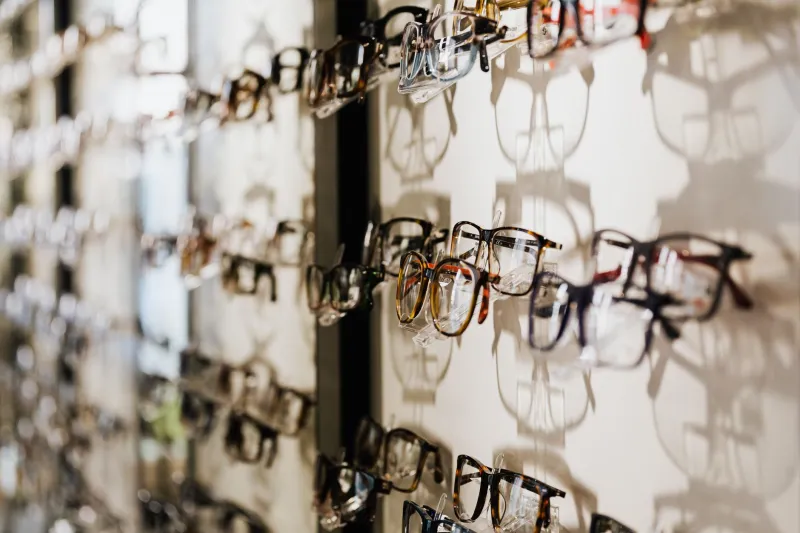
One New Pair and Suddenly Everything Changes: Understanding the Frame Domino Effect

It starts innocently enough. You spot a pair of tortoiseshell frames that feel like they were designed specifically for your face. You buy them. You wear them home. You love them.
And then, almost immediately, something shifts.
Suddenly your go-to reading glasses look a little tired. Your everyday sunglasses feel mismatched with your new aesthetic. The case you've been using since 2019 just doesn't feel worthy of these frames. Before you know it, one purchase has quietly triggered a whole chain reaction—new accessories, new pairs, new storage needs, new decisions. Welcome to the frame domino effect.
If you've ever found yourself deep in this spiral, you're not alone. It's one of the most common experiences among eyewear enthusiasts, and it's worth understanding both the psychology behind it and the practical ways to manage it before your collection outgrows your organizational system.
Why One Pair Is Never Really Just One Pair
There's a well-documented concept in consumer psychology sometimes called the Diderot Effect—named after French philosopher Denis Diderot, who wrote about how receiving a new scarlet robe led him to replace nearly everything in his home to match it. The same principle applies to eyewear.
When you invest in a pair of frames that feel elevated—whether that's in price, style, or quality—your brain recalibrates your standards. The new pair becomes the benchmark. Everything else in your collection gets measured against it, and suddenly things that felt perfectly fine before start to feel like they're falling short.
This isn't a flaw in your thinking. It's actually a pretty normal response to upgrading something you use every day. Glasses are deeply personal accessories. They sit on your face. They interact with every outfit, every hairstyle, every occasion. So when one pair raises the bar, the ripple effect through the rest of your collection is almost inevitable.
The Cascade Plays Out in Stages
For most eyewear lovers, the domino effect unfolds in predictable phases. Recognizing them can help you slow down and make more intentional decisions instead of just reacting.
Stage one: The Comparison Phase. You start holding your other pairs up against the new one—literally and figuratively. You notice scratches you'd stopped seeing. You realize certain frames don't work as well with your current wardrobe as they once did.
Stage two: The Justification Phase. You start building a case for why you need a complementary pair. Maybe the new frames are too bold for work. Maybe they're not great for outdoor activities. Suddenly you have a very logical-sounding reason to keep shopping.
Stage three: The Organizational Crisis. If you didn't already have a solid storage system, this is when things get messy. A new pair means a new case, more surface space, or a full rethink of how your collection is arranged. Frames start piling up in random spots. The chaos creeps in.
Stage four: The Wardrobe Audit. Some people go even further and start questioning whether their clothes still work with their evolving eyewear aesthetic. This is the stage where the domino effect really earns its name.
Getting Ahead of the Spiral
The goal isn't to stop enjoying new frames—that would be missing the point entirely. The goal is to stay in the driver's seat so that your collection grows with intention rather than impulse.
One of the most effective strategies is what we'd call the one-in, one-out rule, applied with a little flexibility. When you bring a new pair into your collection, take a real look at what's already there. Is there a pair that's no longer earning its spot? Donating, selling, or repurposing older frames keeps your collection curated and your storage system from getting overwhelmed.
Another approach is to shop with a gap in mind. Before you start browsing, identify what's actually missing from your current lineup. Do you need a lightweight option for long days? A pair that transitions better from office to evening? Shopping to fill a genuine gap rather than shopping because something caught your eye tends to produce purchases you'll actually reach for.
Your Storage System Has to Grow With You
Here's the part that often gets overlooked in the excitement of a new purchase: your organizational setup needs to be able to absorb the addition without collapsing.
If you're currently storing your frames in a single drawer or a small tabletop case, adding a third or fourth pair might mean it's time to rethink the system entirely. A stackable display tray, a wall-mounted organizer, or a dedicated eyewear stand can transform a cluttered collection into something that's easy to navigate—and honestly, kind of beautiful to look at.
Think about accessibility, too. Your most-used pairs should be the easiest to grab. Seasonal or occasion-specific frames can live somewhere slightly less prime. Building a hierarchy into your storage keeps the daily scramble to a minimum and makes your whole system feel more intentional.
Labeling or categorizing by use case—everyday, work, outdoor, evening—can also help you see at a glance whether your collection is actually balanced or whether you've accidentally ended up with four pairs that all serve the same purpose.
Budget-Conscious Ways to Feed the Habit Without Breaking the System
Let's be real: quality eyewear is an investment, and the domino effect can get expensive fast. A few ways to keep the momentum going without wrecking your budget:
- Set a quarterly eyewear budget and treat it like any other discretionary spending category. This gives you permission to shop without guilt while keeping the spending predictable.
- Explore prescription-ready online retailers that offer stylish options at a fraction of boutique prices. Brands like Zenni, Warby Parker, and EyeBuyDirect have made it possible to build a real collection without spending a fortune on every pair.
- Prioritize accessories smartly. A great case, a quality cleaning kit, and a solid storage solution can make even an affordable pair feel premium. You don't always need more frames—sometimes you just need better support for the ones you have.
Make the Spiral Work for You
There's nothing wrong with loving eyewear and wanting a collection that reflects different sides of your personality and lifestyle. The frame domino effect becomes a problem only when it's running on autopilot—when you're reacting instead of choosing.
When you understand why one new pair tends to set off a chain reaction, you can lean into the good parts (a more thoughtful, well-rounded collection) while sidestepping the chaos (clutter, overspending, a storage system that's bursting at the seams).
So the next time you fall for a new pair of frames, go ahead and enjoy the moment. Just take a breath before the dominoes start falling—and make sure your organizational system is ready to hold everything together.