Dress From the Eyes Down: How to Build a Glasses Collection That Works With Your Whole Wardrobe
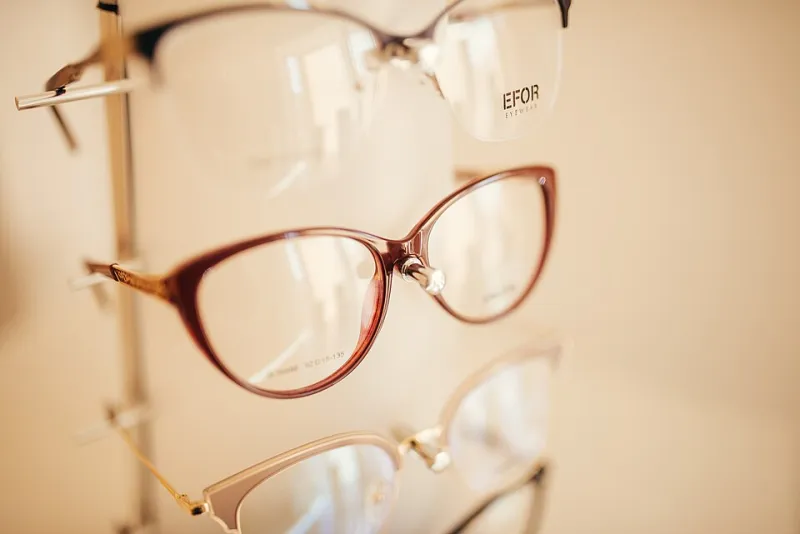
Photo: Shixart1985, CC BY 2.0, via Wikimedia Commons
Here's a thought experiment: when you get dressed in the morning, at what point do you think about your glasses? If you're like most people, the answer is somewhere between "after the shoes" and "never, I just grab whatever's on the nightstand." That's a missed opportunity — a pretty significant one, actually.
Your glasses sit in the center of your face. They are, objectively, the most visible accessory you own. They shape how people perceive your overall look before they register anything else. And yet most of us treat them as an afterthought rather than an anchor. Let's change that.
The Anchor Accessory Concept
In fashion, an anchor accessory is the piece that sets the tone for everything else. For some people, it's a watch. For others, a bag or a specific pair of shoes. Frames are uniquely powerful as anchors because you wear them on your face — the focal point of human connection — every single day.
When your glasses are working with your wardrobe instead of just coexisting with it, something clicks. Outfits feel more intentional. Getting dressed takes less effort. You stop second-guessing yourself in the mirror.
The goal isn't to match your frames to every outfit. That's not realistic, and frankly it's not the point. The goal is to build a collection where each pair has a clear stylistic lane — and where those lanes cover the terrain of your actual life.
Start With Your Wardrobe, Not a Frame Catalog
Before you evaluate a single pair of glasses, spend ten minutes looking at your clothes. Pull out the pieces you actually wear — not the aspirational stuff, the real everyday rotation. What colors show up most? What's the general vibe: structured and tailored, relaxed and casual, creative and eclectic, outdoorsy and functional?
Most people's wardrobes cluster around two or three dominant color stories and one or two style registers. Knowing yours gives you a map for evaluating your frames.
If your closet is built around navy, white, and camel, you're working in a classic, neutral palette. Frames in tortoise, gold, or warm black will feel cohesive. Clear or blush acetate can add a modern softness. A bold red or cobalt frame might be a fun contrast — but only if you have pieces that can actually pull it together.
If your wardrobe leans toward earth tones and texture — olive, rust, cream, denim — you've got more flexibility with warm-toned frames. Amber, brown, and moss-green acetates will feel right at home.
A Quick Color Theory Refresher (Without the Art School Lecture)
You don't need to memorize a color wheel to make this work. A few practical principles are enough:
Analogous works effortlessly. Colors that sit near each other on the spectrum — like warm brown frames with a rust-toned outfit — feel naturally harmonious. This is the safe, reliable approach.
Contrast creates intention. A bold frame against a neutral outfit reads as deliberate and confident. The key is that the contrast feels chosen, not accidental. One strong statement (the frame) against a quieter backdrop (the outfit) is almost always more effective than two competing statements.
Neutrals are the great equalizers. Black, tortoise, clear, gold, and silver frames work across nearly every wardrobe. If you're building a small, versatile collection, neutral frames should anchor it.
Skin tone matters more than frame color. Warm skin tones (golden, olive, peachy undertones) tend to be flattered by warm frame colors — browns, golds, tortoise, warm reds. Cool skin tones (pink, bluish, or neutral undertones) often look best with cool-toned frames — black, silver, jewel tones, clear. This isn't a hard rule, but it's a useful filter.
Style Categories: Mapping Your Frames to Your Life
A genuinely functional eyewear wardrobe covers your actual style needs, not just your aesthetic preferences. Think about your life in sections:
Professional/Polished: Do you work in an environment where how you present matters? You need at least one pair that reads as put-together and authoritative without being stiff. Classic silhouettes — rectangular, oval, subtle cat-eye — in neutral tones tend to serve this role well.
Casual/Everyday: The pair you reach for on weekends, errands, and low-key social situations. This is where you have the most room to express personality. A slightly more relaxed shape or a color you love but wouldn't wear to a board meeting.
Dressed Up/Statement: Not everyone needs this category, but if you go to events, dinners, or occasions where you want to look deliberately styled, having one pair that elevates rather than just coordinates is genuinely useful.
Active/Outdoor: If you spend time outside, a pair of prescription sunglasses or quality tinted lenses in a sporty or durable frame belongs in this slot.
Evaluate your current collection against these four categories. Where are you covered? Where are you not? That gap analysis is more useful than any trend report.
The Clash Audit: When Frames Fight Your Outfits
Sometimes the problem isn't that you don't have the right frames — it's that the frames you have are actively working against certain outfits. This is worth identifying specifically.
A heavy, oversized frame in a bold color can overwhelm delicate or minimalist clothing. Ultra-thin wire frames can disappear against busy patterns or textured layers. Very casual, sporty frames can undercut a polished look even if everything else is right.
Go through your regular outfits and honestly ask: does my usual pair of glasses add to this, stay neutral, or detract from it? If the answer is "detract" more than once or twice, that's a signal — either the frames need to rotate out more deliberately, or there's a gap in your collection that a different style could fill.
Displaying Your Collection to Actually Use It
This is the part that most style advice skips: if your frames are buried in a drawer, you won't rotate them. You'll grab whatever's convenient, which is usually the same pair every day regardless of what you're wearing.
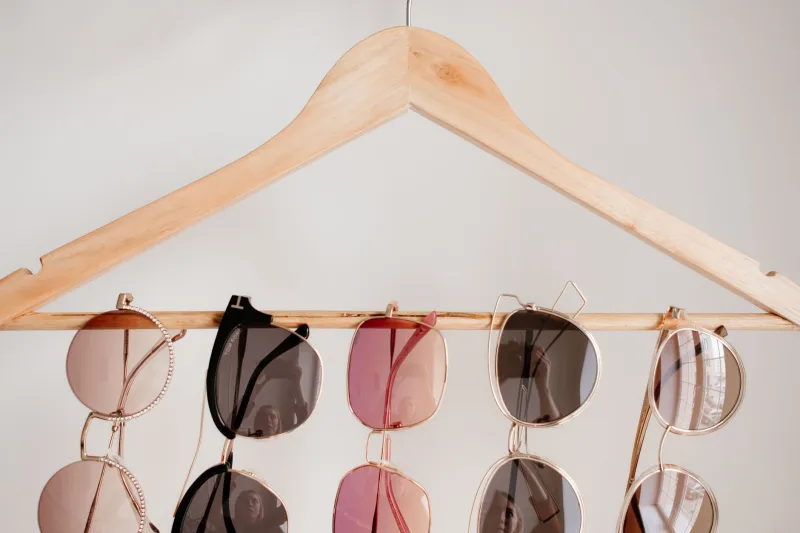
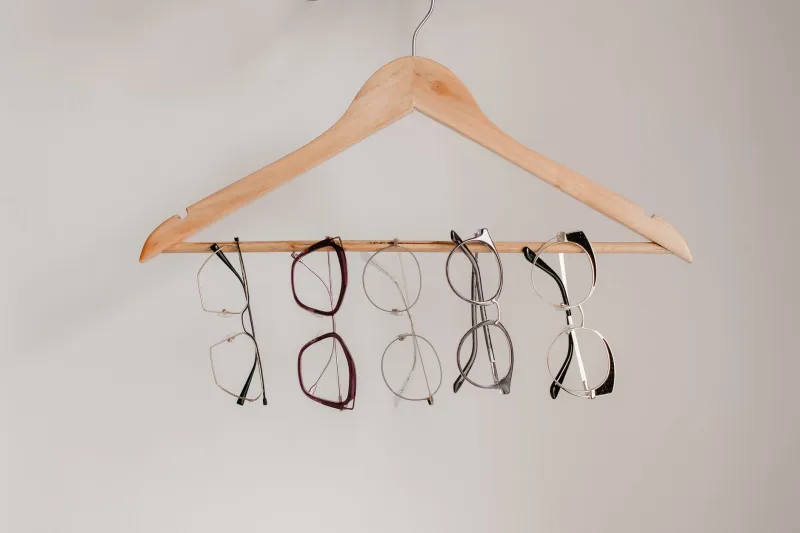
Displaying your frames — on a wall-mounted rack, a countertop organizer, or a dedicated tray — makes switching part of your morning routine rather than a production. When you can see all your options at a glance, you'll actually use them. And using them is the whole point.
Treat your eyewear collection the way you treat your shoes or your jewelry: visible, organized, and accessible. That's when the wardrobe-anchoring magic actually kicks in.