Not All Storage Is Created Equal: How to Find the Right Eyewear System for the Way You Actually Live
The Problem with One-Size-Fits-All Storage
Walk into any big-box store and you'll find the same tired options: a stackable tray, a small case, maybe a rotating countertop stand. They're fine — if fine is what you're after. But for anyone who's built a real eyewear collection, "fine" doesn't cut it. Frames get scratched. Lenses fog up inside poorly ventilated compartments. And when you're running late on a Tuesday morning, digging through a tangled pile of glasses cases is not the vibe.
The truth is, there's no universal storage solution for eyewear enthusiasts. The collector with 30 pairs of vintage cat-eyes has completely different needs than the minimalist who rotates between three functional frames. The good news? The storage world has caught up — and there are now systems designed for practically every lifestyle, aesthetic, and collection size imaginable.
Know Your Collection Before You Know Your System
Before you invest in any organizational setup, take a real inventory of what you're working with. Not just how many frames, but what kind of frames.
Delicate vintage pieces with thin wire temples need gentle, individual compartments — not a shared tray where metal scrapes against metal. Oversized statement sunglasses require wider slots. Reading glasses you grab five times a day need to be within arm's reach, not tucked inside a drawer. Prescription frames you wear daily deserve a different home than the pairs you only pull out for beach trips or ski weekends.
Ask yourself a few honest questions: How often do you rotate your frames? Do you have a dedicated vanity or dresser, or are you working with limited counter space? Is your home aesthetic more modern and minimal, or warm and eclectic? The answers matter more than you'd think.
The Case for Vintage Display Cases
For collectors who love the aesthetic dimension of their hobby, vintage display cases — think old jewelry armoires, antique apothecary drawers, or repurposed watchmaker's cases — offer something generic storage simply can't: character.
Take Marissa, a Chicago-based graphic designer who's been collecting frames for over a decade. She found an old wooden jewelry cabinet at an estate sale and converted it into a dedicated eyewear display, lining each drawer with velvet to protect her lenses. "It became a focal point of my bedroom," she says. "It doesn't just store my glasses — it tells a story about who I am."
Vintage cases work beautifully when your collection has a cohesive aesthetic, or when you want your storage to double as décor. The catch? They're not always practical for large collections that need quick daily access, and they can be harder to keep dust-free.
Wall-Mounted Systems: When Your Collection Deserves to Be Seen
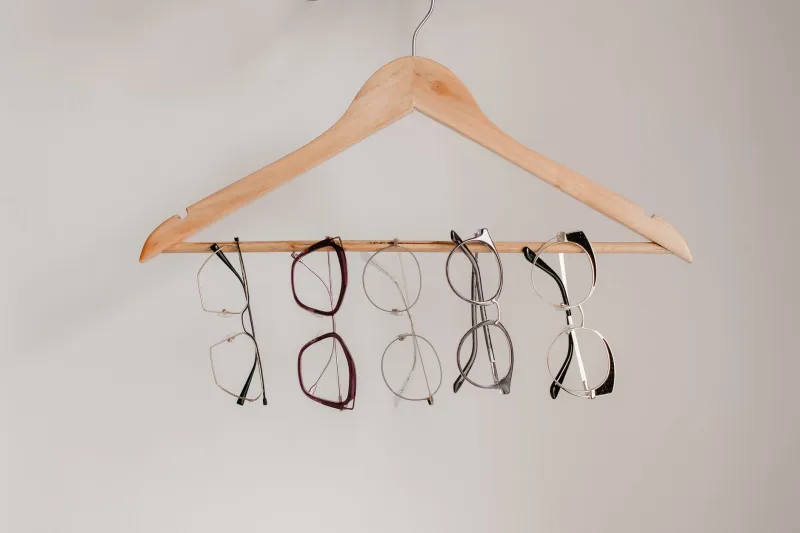
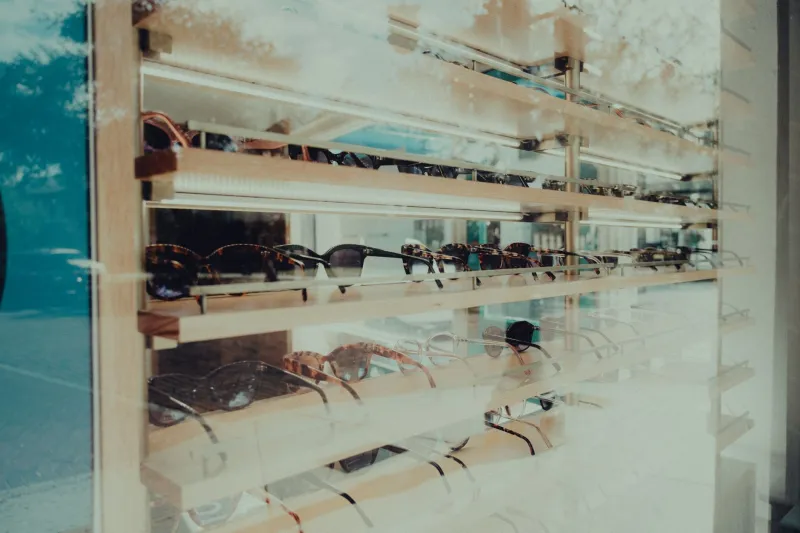
If you've got the wall space — and the confidence to put your frames on display — wall-mounted systems are having a serious moment. Floating shelves with small pegs or hooks, pegboard panels, acrylic wall organizers, and custom shadowbox-style frames are all legitimate options for collectors who want their eyewear to function as part of their home décor.
These systems are especially effective in dressing rooms, walk-in closets, or bedroom walls near a vanity mirror. You can see every pair at a glance, grabbing what you need without rummaging. It's the eyewear equivalent of an open-concept kitchen — everything visible, everything accessible.
The tradeoff: dust is a real issue. Frames stored in open-air setups need regular cleaning, and if you live in a sunny room, UV exposure can gradually affect certain frame materials and lens coatings. A quick weekly wipe-down routine is non-negotiable if you go this route.
Drawer Inserts and Modular Trays: The Minimalist's Best Friend
Not everyone wants their glasses on display — and that's completely valid. For those who prefer a cleaner, more discreet setup, drawer inserts and modular tray systems offer the best of both worlds: organized storage that stays out of sight.
Modular systems let you customize compartment sizes based on what you own, which means your oversized aviators get the space they need while your slim reading glasses aren't rattling around in an oversized slot. Velvet-lined versions add an extra layer of protection for frames with delicate finishes.
This approach works especially well inside nightstand drawers, bathroom vanity drawers, or dedicated dresser space. It keeps your collection protected, organized, and out of the dust — while still being easy to access when you need it.
Tech-Enabled Tracking: Overkill or Game-Changer?
Here's where things get interesting. For larger collectors — we're talking 20, 30, or even 50+ pairs — remembering what you own, where it is, and when you last wore each frame can become genuinely challenging. That's where some enthusiasts are turning to tech.
Simple photo-catalog apps let you create a visual inventory of your collection, tag frames by style or occasion, and even track rotation history. Some collectors use spreadsheets. Others have started using small Bluetooth trackers (think Tile or AirTag) tucked into cases for their most valuable vintage finds.
Is it extra? Sure. But if you've ever spent 20 minutes searching for a specific pair before a flight, or discovered a beautiful frame at the back of a closet that you'd completely forgotten about, the appeal makes a lot of sense.
Building Your Framework: A Simple Way to Choose
Still not sure which direction to go? Here's a quick framework to help you decide:
Small collection (1–10 pairs): A quality countertop organizer, a dedicated drawer insert, or a small display shelf is probably all you need. Focus on accessibility and protection over elaborate systems.
Mid-size collection (10–25 pairs): Start thinking about zoning — a daily-access spot for your most-used frames and a more protected storage area for occasional pairs. Wall-mounted or modular drawer systems work well here.
Large collection (25+ pairs): You need a real system. Consider combining visible display for your favorites with protected storage for the rest. A photo inventory is genuinely helpful at this scale, and modular systems that can grow with your collection are worth the investment.
Your Collection, Your Rules
The best eyewear storage system is the one you'll actually use — consistently, every single day. That means it has to fit your space, your routine, and honestly, your personality. A stunning wall installation means nothing if you're always in a rush and need to grab-and-go. A tech-forward tracking system is useless if you're not a spreadsheet person.
Start with your real life, not your aspirational one. Build a system that meets you where you are — and leaves room to grow as your collection does. Because if there's one thing most eyewear enthusiasts agree on, it's that the collection never really stops growing.